
The Forward-Deployed Engineer Model: Why Consulting Is Dead for Enterprise AI Delivery
TL;DR: The forward-deployed engineer model is replacing classic consulting because enterprise AI projects now live or die on execution, not advice. McKinsey's State of AI research keeps showing the same uncomfortable truth: adoption is rising, but value capture is uneven. Gartner

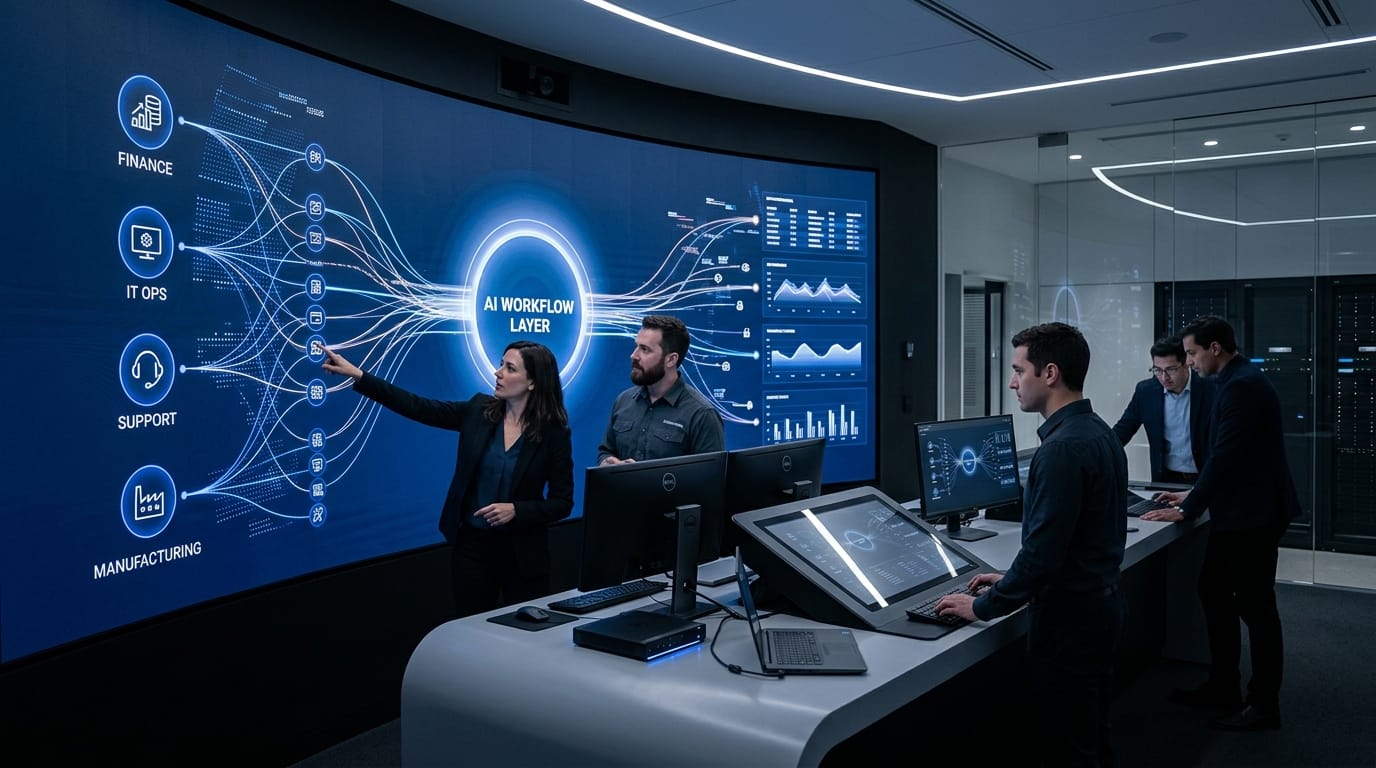
TL;DR: The forward-deployed engineer model is replacing classic consulting because enterprise AI projects now live or die on execution, not advice. McKinsey's State of AI research keeps showing the same uncomfortable truth: adoption is rising, but value capture is uneven. Gartner added another signal in March 2024 when it said 55% of supply chain organizations will invest in applications supporting AI and advanced analytics by 2026. The money is moving. The bottleneck is delivery. The winners will be the teams that can connect real systems, encode policy, and ship working workflows on customer infrastructure—not the teams that map a process for twelve weeks and hand back a deck.
That is why the old consulting model is starting to look structurally obsolete in enterprise AI. Buyers do not need another transformation narrative. They need somebody who can sit inside the mess of SAP, Oracle, NetSuite, ticketing systems, document stores, inboxes, spreadsheets, and approval paths, then turn that mess into a governed operating system that actually runs. That is a builder problem.
If your AI program ends with a steering committee readout instead of a workflow running in production, you did not buy transformation. You bought documentation.
Why is the forward-deployed engineer model replacing consulting?
Because enterprise AI delivery is no longer a recommendation business. It is a systems-construction business.
Classic consulting was built for a world where the hardest part of modernization was deciding what should happen. That world is gone. Most operators already know the rough answer. They know invoice approvals take too long. They know support teams waste time on repetitive tickets. They know finance still reconciles exceptions manually. They know IT operations are full of password resets, access provisioning delays, and workflow dead zones between systems. The real problem is not diagnosis. It is shipping a replacement workflow without breaking governance, uptime, or auditability.
That is where the old model starts to crack. Strategy teams interview stakeholders, map the current state, draw a target state, and produce a sequence of workstreams. Then the client still has to do the dangerous part: connect the systems, handle the ugly exceptions, encode policy, manage data boundaries, and decide where the AI can act versus where a human must approve. None of that work is presentation-friendly. All of it determines ROI.
Andreessen Horowitz has already pointed back toward services-heavy AI delivery in its writing on canonical startup ideas. That is not nostalgia for consulting. It is recognition that AI products become real only when someone does the embedded implementation work. The difference is that forward-deployed engineering treats that work as the product, not as a prelude to PowerPoint.
Direct answer: The forward-deployed engineer model is replacing consulting because enterprise AI value comes from implemented workflows, not recommendations, and implemented workflows require engineers who can build inside operational reality.
What is broken in the classic consulting model for enterprise AI?
The model breaks at the exact point where enterprise AI gets expensive: the handoff between plan and production.
Most consulting firms are still optimized for analysis, consensus building, and program management. Those skills are useful. They are just insufficient. A finance automation project does not fail because nobody wrote down the process. It fails because the exception paths were uglier than expected, the ERP fields were unreliable, approvals were implicit instead of explicit, and the AI team discovered too late that the real source of truth lived partly in email and partly in accounting notes. The same pattern shows up in IT operations, customer support, and plant workflows. The moment you leave the clean process diagram, you enter live infrastructure.
That is also where legacy software context matters. Systems like SAP, Oracle, Salesforce, and NetSuite are still everywhere. They remain important systems of record, but they rarely contain the full judgment path needed for modern automation. A consultant can describe how an AP exception should flow. A forward-deployed engineer has to make the connectors work, define the negative rules, decide what evidence the model can see, and ensure the result writes back safely. Those are different professions.
Governance pressure makes the gap wider. The European Commission says the AI Act entered into force on 1 August 2024. Even where the AI Act does not directly regulate a workflow, it reinforces the same enterprise instinct already visible across Europe and the US: know your data boundary, know your intervention path, and know who owns the model behavior. That makes the old “advise first, implement later” posture weaker than before. The architecture decisions and the compliance decisions are now intertwined.
Direct answer: Classic consulting breaks because it treats implementation as a downstream execution detail, when in enterprise AI the implementation choices around data, policy, and system actions are the strategy.
What does the forward-deployed engineer model actually look like?
It looks like a builder embedded close enough to the customer's workflows to turn operational truth into production behavior.
The first responsibility is connector reality. Forward-deployed engineers do not assume the stack is coherent. They verify it. Which system actually holds the invoice image? Where do approval thresholds really live? Which CRM field is trustworthy and which one is decorative? Where do service agents leave the note that changes the outcome? Which identity system controls the action? If those questions are wrong, the automation fails no matter how clever the model is. That is why enterprise connector architecture is usually more important than the model choice in week one.
The second responsibility is policy encoding. Most workflows are not hard because of happy paths. They are hard because of exceptions. A customer refund above a threshold may require a human. A finance adjustment may need dual approval. A maintenance recommendation may be allowed to enrich a work order but not close it. An access request may be safe to provision only if multiple system checks align. The forward-deployed engineer's job is to drag those rules out of tribal memory and make them executable.
The third responsibility is deployment boundary control. Mistral's May 2025 Le Chat Enterprise launch matters here because it made deployment flexibility explicit: self-hosted, private cloud, public cloud, and hosted. That is not just a model-vendor feature list. It is a market signal that buyers now expect choice over where AI runs and where data crosses boundaries. In enterprise delivery, that choice changes everything from connector design to security review to latency and observability. A real builder has to design for the client's boundary, not for a vendor's default hosting preference. That is exactly why security and data-control design belong in the product conversation on day one.
The fourth responsibility is workflow ownership. Forward-deployed engineers do not stop at surfacing an answer. They route work, prepare decisions, enrich records, and push actions back into the operational system with auditability. In InfraHive's world, that means AI-native systems for finance, IT operations, and support that run on customer infrastructure with zero data leaving the environment unless the customer wants it to. That posture matters because enterprise buyers are not asking for a chatbot. They are asking for a governed replacement to brittle human middleware.
Direct answer: The forward-deployed engineer model combines connector verification, policy encoding, deployment-boundary design, and audited workflow execution so the customer gets a live system instead of a translated requirement document.
What does implementation look like in practice?
Usually 3 to 4 weeks for a first real workflow if the team starts narrow and behaves honestly.
The right entry point is not “transform the business.” It is one painful workflow with measurable economics: invoice exception handling, access provisioning, Tier-1 support triage, order-status automation, maintenance triage, or month-end reconciliation prep. Pick a process where humans are clearly acting as glue between systems. That is where AI-native workflow design pays back fastest.
Week one is about evidence, not optimism. Which systems are involved? Which records are authoritative? Where do exceptions hide? Which approvals are formal, and which ones only exist because a team lead remembers to check something? Forward-deployed engineers spend this phase in the uncomfortable gap between official process maps and real work. That is the whole point. If you skip that gap, you automate a fantasy.
Week two is the connector and policy work. Bring the relevant systems into one governed boundary. Define what the system can read, what it can recommend, what it can draft, what it can execute, and what must stay human. Decide where logs live. Decide how rollback works. Decide what confidence threshold matters and what evidence has to be shown alongside a recommendation. This is where classic consulting usually hands off and where forward-deployed engineering actually starts to earn its keep.
Week three is the workflow behavior, monitoring, and rollout. The new system should run in parallel or on one narrow slice first: one business unit, one exception type, one plant, one approval band. Compare cycle time, manual touches, escalation rates, and rework. Expand only once the system proves it can survive contact with reality. There is no prize for replacing all of SAP-adjacent work in one heroic release.
The objections are usually predictable. “Our data is messy.” Of course it is. “We cannot move data outside approved environments.” Then do not. “Our teams are unique.” Good; that is why a generic bot will miss the point. “We already pay consultants.” Fine, but if the output is a program office instead of a live workflow, you are still paying humans to be the middleware.
Direct answer: Real implementation starts with one expensive workflow, maps the ugly edges first, builds connectors and policy before polish, and expands only after measured production results.
What results should operators expect?
The first result is not AI theater. It is less operational drag.
When a forward-deployed team replaces a workflow properly, cycle times shrink because the system gathers evidence before the human intervenes. Manual touches fall because records are enriched automatically. Escalations drop because policy gets encoded instead of re-explained. The business also stops paying the tax of fragmented judgment scattered across inboxes, spreadsheets, and tribal memory.
The second result is reusable infrastructure. Once connectors, policy patterns, and audit trails exist for one workflow, the next workflow gets cheaper. That is a much better economic profile than the old consulting loop where each project starts with discovery, interviews, and another target-state diagram. Products like MetricFlow fit this logic well: the value is not one isolated finance feature, but a system that can extend from AP automation into reporting and operational control because the foundation is already in place.
You can see the same design pattern in customer deployment outcomes. The real proof is not that a model can answer a question. It is that a workflow runs faster, safer, and with fewer humans acting as translators between software systems.
Direct answer: Expect shorter cycle times, fewer manual handoffs, better auditability, and lower marginal cost for each additional workflow once the first one is live.
What does this mean for retailers, ecommerce operators, and manufacturers?
It means the delivery model is now part of the product decision.
Retailers need builders who can wire forecasting, inventory, support, and finance decisions across systems without turning the project into another platform migration saga. Ecommerce operators need ranking, support, and back-office automation tied to real commercial policy instead of plugin sprawl. Manufacturers need on-prem or tightly governed workflow systems that can sit near plant and enterprise data without shipping operational judgment into somebody else's black box.
In both Europe and the US, the combination of rising AI spend, governance pressure, and data-boundary concern will reward operators who choose delivery teams that can actually ship inside those constraints. The old split between strategy first and implementation later is becoming a liability.
Direct answer: Operators in retail, ecommerce, and manufacturing should evaluate AI vendors partly on who will build the live system, under what boundary, with what policy controls—not just on model demos.
So what should an enterprise team do next?
Pick one workflow where humans are obviously acting as the integration layer between old systems and reality. Then ask a simple question: do you want another advisory project around it, or do you want a builder who will replace it?
If you want to explore what forward-deployed enterprise AI delivery looks like on infrastructure you control, start at https://infrahive.ai and explore how this works for your stack. Consulting is not dead because advice stopped mattering. It is dead because advice without shipped workflow is now too expensive to tolerate.
Direct answer: Start with one painful workflow, choose a builder over a deck, and expand only when the first system earns trust in production.
Frequently Asked Questions
What is a forward-deployed engineer in enterprise AI?
A forward-deployed engineer is an implementation-focused builder who works close to customer operations, connects real systems, encodes policy, and ships AI workflows into production rather than stopping at recommendations.
How is this different from classic consulting?
Classic consulting often produces analysis, program plans, and stakeholder alignment. Forward-deployed engineering owns the dangerous part: live connectors, policy logic, deployment boundaries, and workflow execution.
Does this model only work for large enterprises?
No. Mid-market operators often benefit even more because they cannot afford long strategy phases and need measurable workflow wins quickly.
Why does deployment boundary matter so much?
Because boundary decisions affect security review, connector design, latency, compliance posture, and whether the customer truly controls how operational data and model behavior are handled.
What is the biggest failure mode in enterprise AI delivery?
The biggest failure mode is treating implementation like a downstream detail. If the connectors, policies, and write-back actions are weak, the project stays a pilot no matter how good the demo looked.