
Why Retail Demand Forecasting Is Leaving SaaS Planning Suites for AI-Native Systems
TL;DR: Retail demand forecasting is moving out of black-box planning suites and into AI-native systems retailers can actually control. The reason is simple: demand signals now change faster than quarterly software roadmaps. The U.S. Census Bureau reported total retail and food se

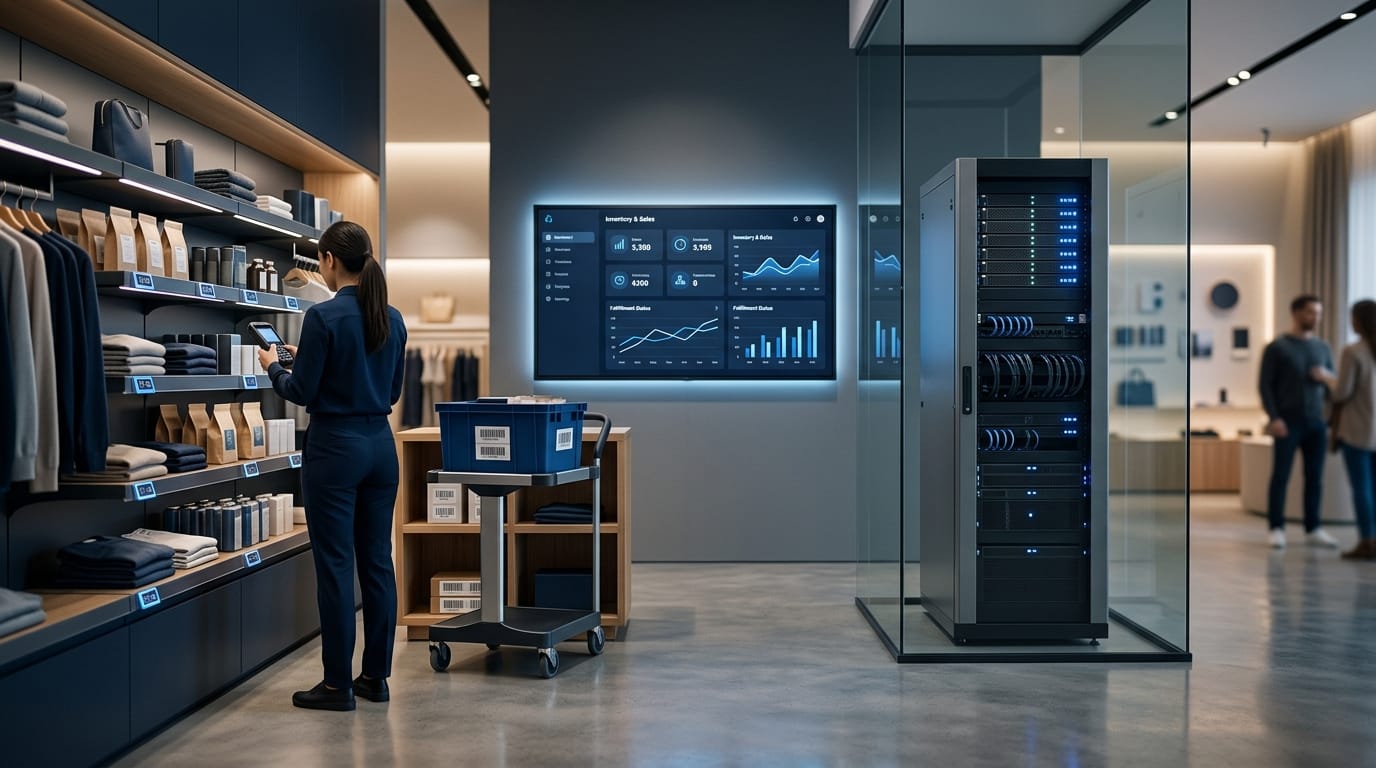
TL;DR: Retail demand forecasting is moving out of black-box planning suites and into AI-native systems retailers can actually control. The reason is simple: demand signals now change faster than quarterly software roadmaps. The U.S. Census Bureau reported total retail and food services sales of $729.8 billion in January 2026, up 4.8% from a year earlier, while Eurostat reported January 2026 retail trade volume up 1.5% year over year in the euro area and 2.0% in the EU. When demand keeps moving and margin is tight, retailers do not need another dashboard. They need a forecasting system that runs on their data, fits their operating model, and writes back into the stack they already use.
The old planning-suite pitch was comforting: centralize the data, trust the vendor logic, and let the software tell the business what to buy, move, and discount. That worked when the main problem was reporting latency. It breaks when the real problem is judgment across noisy data, fast promotions, channel fragmentation, and constant assortment change. Forecasting is no longer a module. It is the decision layer that shapes inventory, labor, replenishment, and markdowns. Renting that layer inside someone else's boundary is becoming a bad bet.
Retail forecasting used to be about better spreadsheets. Now it is about who owns the reasoning system behind margin.
Why is retail demand forecasting breaking away from SaaS planning suites?
Because the stack underneath modern retail is too dynamic for fixed planning logic to stay useful for long.
AWS defines demand forecasting as the process of predicting future customer demand over a defined period using historical and current data. That definition is fine as far as it goes, but it understates the real issue. In a live retail environment, the problem is not only forecasting demand. The problem is deciding which signals count, how fast they are incorporated, which constraints matter by category, and what actions can safely be triggered downstream. That is not one model. That is a controllable operating system for commercial judgment.
The classic suite architecture assumes historical sales, promotions, seasonality, and supply constraints can be normalized into a vendor's planning model, then pushed back downstream into ERP, WMS, OMS, or replenishment tools. But most retail businesses are messier than the suite expects. Point-of-sale data arrives at different grain than ecommerce events. Inventory truth differs by location and channel. Promotions distort the baseline. Merchandisers override planners. Regional teams maintain shadow logic in spreadsheets. The suite becomes a compromise machine, not a decision engine.
Worse, the most valuable forecast work no longer happens in batch. Retailers need intraday reactions to stock shifts, demand spikes, weather swings, campaign response, and localized fulfillment constraints. A suite that can only explain itself through delayed exports and consultant-configured rules will always be behind the business. The company ends up paying enterprise-software prices for a system nobody wants to trust without manual review.
Direct answer: Retail demand forecasting is leaving SaaS suites because retailers now need a forecasting system that can adapt quickly, expose its logic, and fit directly into operational workflows. Fixed vendor logic is too slow and too opaque for the pace of modern retail.
What is actually wrong with the traditional planning-stack model?
The weak point is not that the vendors are foolish. The weak point is architectural mismatch.
Retail planning suites were built for an era when integration meant scheduled file drops and the main promise was process standardization. Modern retail requires something else. Forecasting now depends on cleaner access to POS, ecommerce clickstream, promotions, pricing calendars, supplier lead times, returns, warehouse position, product attributes, and local store behavior. Those signals change continuously, and their relevance differs by category. A beauty retailer, a grocery chain, and an apparel brand should not be trapped inside the same vendor-shaped reasoning path.
That mismatch creates three expensive side effects. First, connector debt. Teams spend months reconciling inconsistent data feeds so the suite can digest them, then repeat the same pain every time another system changes. Second, override culture. Because the planner does not trust the black-box output, manual adjustments proliferate, and the organization quietly returns to spreadsheet governance. Third, write-back risk. Once a forecast finally exists, pushing it safely into replenishment, purchasing, or allocation logic becomes a brittle integration exercise instead of a designed control path.
The hidden tax is organizational. Commercial teams start treating forecasting as software administration instead of an owned capability. If the best answer to a merchandising question is “that is how the suite works,” the business has already surrendered too much. Forecasting touches working capital, availability, markdown exposure, and customer experience. Those are not side features. They are the economics of the retailer.
Direct answer: The traditional planning-stack model fails because it forces complex, fast-changing retail judgment into a rigid vendor workflow. The result is connector debt, planner overrides, and weak operational trust.
What does an AI-native forecasting system look like instead?
It looks like a retailer-owned decision layer built around connectors, evidence, and explicit write-back rules.
Start with the deployment boundary. Not every retailer needs literal on-prem infrastructure, but every serious retailer does need control over where the forecasting logic runs, how models are changed, and what data leaves the environment. That can mean private cloud, retailer-controlled VPCs, or selected edge patterns for stores and fulfillment nodes. The point is not ideology. The point is control. Mistral now explicitly offers self-hosted, public-cloud, private-cloud, or vendor-hosted deployment for enterprise products. That matters because it reflects a broader market truth: serious enterprises increasingly expect deployment flexibility as a baseline requirement.
Next comes the connector layer. This is where most “AI forecasting” stories become fake. A useful system must pull from POS, OMS, ERP, WMS, promotion calendars, pricing feeds, supplier data, and product metadata without turning integration into a never-ending custom project. Those connections should be reusable infrastructure, not hand-wired one-offs. That is why retail connector architecture matters more than flashy demo prompts.
Above the connectors sits the forecasting and reasoning layer. This layer does more than fit time-series models. It can select features by category, factor promotions and stockouts into the interpretation, distinguish baseline demand from campaign distortion, and generate an explanation a planner can inspect. One model may handle short-horizon store replenishment. Another may handle assortment planning. A rules-and-policy layer can decide when output is advisory, when it can auto-write to a replenishment queue, and when a human sign-off is mandatory.
That structure changes the economics of forecasting. Instead of waiting for a suite vendor to expose a new capability, the retailer can change models, features, or policy directly. Instead of hiding override behavior in offline spreadsheets, the system can record planner intervention as training signal. Instead of treating inventory and planning as separate conversations, the forecasting layer can plug straight into downstream action paths. That is why deployment control and data security are not compliance paperwork. They are product features.
The cleanest migration path keeps existing systems as systems of record while replacing the judgment loop around them. ERP can keep transaction history. WMS can keep warehouse truth. OMS can keep order state. The AI-native layer becomes the place where those signals are combined, interpreted, and converted into action. That is how retailers replace legacy planning logic without pretending the whole back office disappears overnight.
Direct answer: An AI-native forecasting system combines retailer-controlled deployment, reusable connectors, multiple fit-for-purpose models, and policy-based write-back so the forecast becomes a governed operational system rather than a static SaaS feature.
What does implementation look like in practice?
Usually six to ten weeks for one disciplined workflow, not a year-long transformation circus.
The smartest first target is not “all forecasting.” It is one painful planning loop with clear economic value. That could be store-level replenishment for a volatile category, promotion-aware forecasting for a set of SKUs, markdown planning support, or inventory rebalancing across channels. Pick a narrow decision path where bad forecasts are visible and expensive.
Weeks one and two are about scope and signal quality. Which data actually matters? Which overrides are currently happening offline? Where does the forecast need to land to become useful? Retail organizations often discover that the real process is split between suite output, buyer instinct, supplier constraints, and spreadsheet patches. That discovery is not failure. It is the beginning of honesty.
Weeks three and four are about connectors and control. Stand up the minimum viable data paths. Define how POS, promotions, inventory, lead times, and product metadata are joined. Decide which forecasts are advisory and which can affect replenishment or allocation automatically. If the write-back logic is vague, the system will either be ignored or become dangerous. There is no durable middle ground.
Weeks five and six are about model behavior and planner trust. A forward-deployed engineer is useful here because somebody has to bridge category nuance, system behavior, and commercial reality. That role is not management theater. It is the person who can sit with planners, merchants, and engineers, then turn operational truth into working product decisions. They help the retailer avoid the common mistake of tuning a beautiful model that nobody will use because the explanation layer is weak or the workflow fit is wrong.
Common objections are predictable. “Our demand is too irregular.” Fine. That means the system needs segmented models, not a generic average. “Our data is messy.” Also normal. That is why connector design is central. “We cannot risk automatic decisions.” Good. Then start with a ranked recommendation workflow and human approval. “We already own a planning suite.” Also fine. Keep it temporarily as a record and reporting surface while the new layer proves it can outperform the old judgment path.
Direct answer: Real implementation starts with one painful forecast-driven workflow, clear connectors, explicit approval rules, and a forward-deployed engineer who can translate between retail operations and model behavior.
What results should retailers expect when they own the forecasting stack?
First, faster reaction time. When the forecast layer sits directly on live signals instead of waiting for a vendor-shaped process, planners can respond sooner to demand shifts, supply issues, and promotion effects. That reduces the lag between evidence and action.
Second, cleaner working-capital decisions. Better forecast control means less blind buffer stock and fewer avoidable markdowns. It also means the organization can explain why inventory moved where it did, which matters when finance starts asking where margin leaked. This is where InfraHive's general approach fits: build the system the client owns, then replace the brittle legacy logic around it. The same logic that makes MetricFlow compelling in finance applies here too. Put judgment where the business can inspect and improve it.
Third, reusable infrastructure. Once the retailer owns connectors, policy, and model orchestration, the next workflow is cheaper. Promotion planning, allocation, assortment support, and returns forecasting can reuse the same foundations. That is a far better compounding pattern than paying a suite vendor more each year for another sealed module. If you want evidence of this style of system building, customer outcomes and deployment patterns are more useful than another generic AI-maturity matrix.
Direct answer: Owning the forecasting stack improves reaction speed, working-capital control, and the cost of future AI rollouts. The gain is not just forecast accuracy. It is operational control.
What does this mean for retailers in the US and Europe?
It means the best retailers will stop treating forecasting as packaged software and start treating it as core infrastructure.
The market context is not subtle. Retail demand is still moving, margin pressure is still real, and both US and European operators are being forced to run leaner with better inventory judgment. When sales are growing unevenly across channels and regions, the company that owns its planning logic has an advantage over the company waiting for a vendor release cycle.
For European operators, data control and governance pressure make retailer-owned deployment even more attractive. For US operators, speed, channel complexity, and labor constraints push in the same direction from a different angle. Different regulatory language, same architectural conclusion: keep the decision layer close to your systems and under your rules.
Direct answer: In both the US and Europe, retailers that own their forecasting infrastructure will move faster and protect margin better than those still trapped inside generic planning-suite logic.
So what should a retailer do next?
Pick one forecast-driven workflow where the current system is obviously too slow, too opaque, or too manual. Keep the deployment boundary under your control. Treat connectors and write-back rules like first-class product requirements. Then expand only after the first loop proves it can earn planner trust and improve inventory decisions.
If that sounds more useful than buying another layer of software theater, start at https://infrahive.ai and explore how this works for your stack. The goal is not a prettier forecast. It is a retailer-owned system that can make better decisions.
Direct answer: Start narrow, own the boundary, and turn forecasting into a governed system you can improve instead of a black box you rent.
Frequently Asked Questions
Why are retailers moving away from planning suites for demand forecasting?
Because modern retail forecasting depends on faster signals, cleaner connector logic, and clearer operational control than most fixed planning suites can provide. Retailers want a system they can tune directly instead of waiting for vendor logic to catch up.
Does AI-native forecasting require replacing ERP or WMS immediately?
No. The common first step is to keep ERP, OMS, and WMS as systems of record while an AI-native layer replaces the manual judgment loop around forecasting and replenishment.
What data sources matter most for retail demand forecasting?
POS data, ecommerce demand signals, promotions, pricing changes, inventory position, supplier lead times, product attributes, and planner overrides usually matter more than any single model choice.
How long does a first deployment usually take?
A disciplined first workflow can often be implemented in roughly 3 to 4 weeks if the data sources are known and the approval logic is clear.
Why does deployment control matter so much?
Because forecasting is not just analytics. It affects replenishment, allocation, and margin. Retailers need to know where the system runs, how it uses data, and how output turns into downstream action.