
SAP Forecasting Alternative: Why European Retailers Are Moving to Customer-Controlled AI Planning
TL;DR: A SAP forecasting alternative is no longer just a better demand model. It is a customer-controlled AI planning layer that can read inventory, promotions, supplier risk, and finance constraints in one place, then act inside rules the retailer actually owns. SAP said Joule w

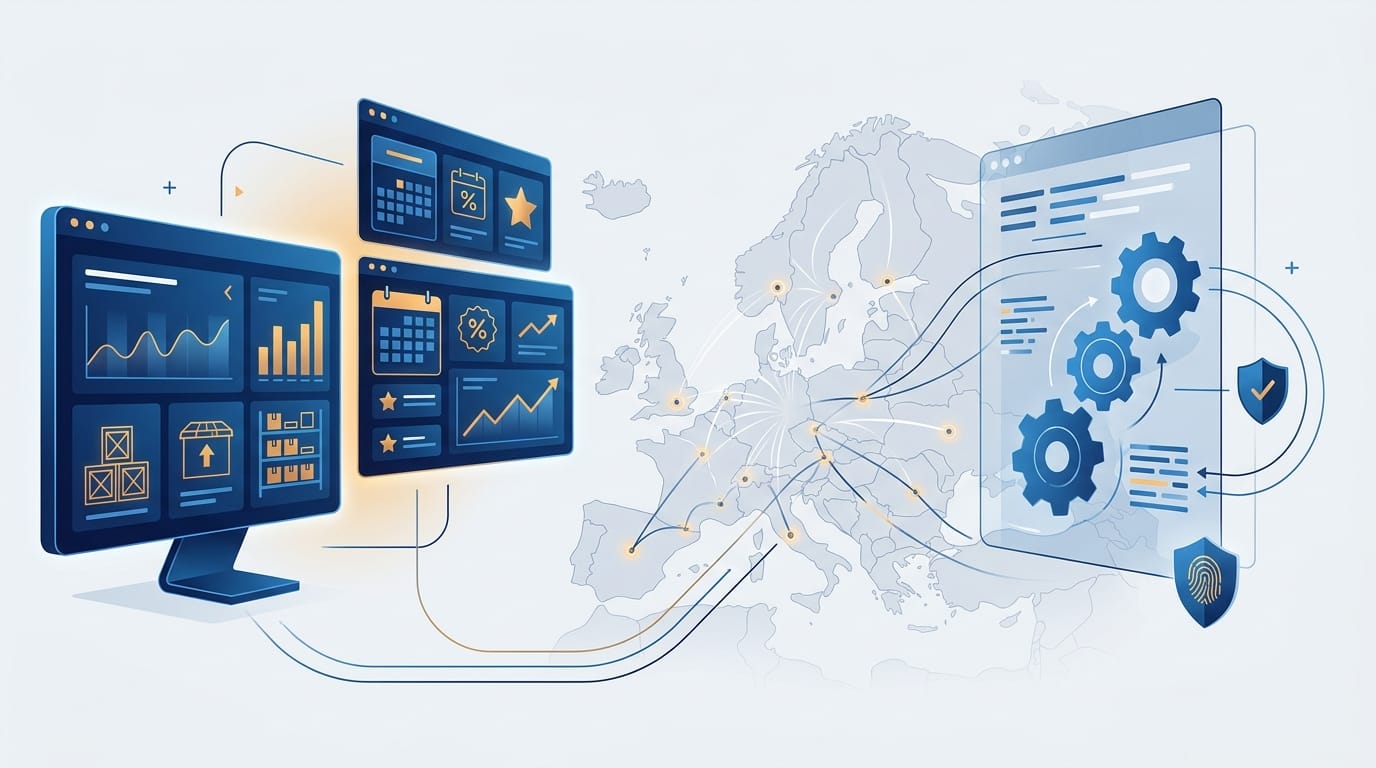
TL;DR: A SAP forecasting alternative is no longer just a better demand model. It is a customer-controlled AI planning layer that can read inventory, promotions, supplier risk, and finance constraints in one place, then act inside rules the retailer actually owns. SAP said Joule was live across more than 35 SAP solutions in Q1 2026, while Reuters reported renewed AI disruption jitters across software stocks on 9 April 2026. Put those signals together and the conclusion is blunt: the planning layer is changing, and retailers that keep all planning logic trapped inside old suite workflows will move too slowly.
European retailers do not have a forecasting problem in isolation. They have a workflow problem. Forecasts only matter if they change replenishment, transfers, promotions, markdown timing, supplier escalation, and finance planning fast enough to matter.
If demand planning cannot trigger governed action across systems, it is reporting with better branding.
Why are retailers looking for a SAP forecasting alternative now?
Because the old planning stack is too slow for the volatility it now has to absorb.
Retail demand planning used to tolerate delay. Teams could forecast weekly, pass exceptions through email, update spreadsheets, argue over whose numbers were right, and still survive. That operating model breaks when assortments change faster, promotions shift demand in hours rather than weeks, supplier reliability swings, and finance wants tighter control over working capital. The issue is not just model accuracy. The issue is latency between signal, decision, and execution.
This is why a serious SAP forecasting alternative is showing up in more boardroom and operations conversations. SAP itself has made the direction obvious: it said Joule was live across more than 35 SAP solutions in Q1 2026. Even the incumbents know static enterprise software is giving way to intelligent workflow layers. Reuters' reporting on renewed AI disruption jitters in software markets matters for the same reason. Investors are reacting to the same structural change operators can already feel: a lot of old software value came from owning screens and workflow bottlenecks, and AI is attacking both.
European retailers feel this especially hard because they are balancing margin pressure, labor cost, data governance, and regional supply complexity at the same time. When inventory moves late, the damage shows up everywhere: missed sales, emergency transfers, markdown exposure, and too much cash trapped in the wrong stock. A planning tool that only produces a number without governing the next action is not enough anymore.
Direct answer: Retailers are looking for a SAP forecasting alternative because the old suite-bound planning process cannot connect volatile demand signals to fast, governed operational action.
What is broken in the legacy retail planning stack?
The stack was built for periodic coordination, not continuous decision-making.
A typical retailer still spreads planning logic across ERP, replenishment tools, spreadsheets, promotion calendars, supplier scorecards, BI dashboards, and email approvals. The forecast may sit in one place, the promotion assumption in another, the supplier constraint in a third, and the finance guardrail in a fourth. When a planner needs to decide whether to rebalance inventory, cut a purchase order, or accelerate a supplier conversation, they end up acting as the integration layer between systems.
That creates three ugly failure modes. First, planning becomes retrospective because evidence takes too long to assemble. The team is always looking at last week's explanation instead of this week's decision. Second, exception handling becomes the real job. The nominal process might be automated, but the work that actually matters lives in Slack threads, meetings, and one-off spreadsheets. Third, the system gets more expensive every year because every new rule, exception, or market shock requires more custom logic piled into software that was not built to reason.
The problem gets worse when leaders try to patch the gap with point AI. A model can produce a demand signal, but that still does not answer the operational questions that matter. Which stores should get allocation priority? Which supplier is already at risk? Which items are promotion-sensitive? What working-capital threshold should block an automated reorder? Which exception needs a merchant, and which one can flow automatically? Legacy planning stacks rarely answer those questions cleanly because the evidence and the policy are fragmented.
That is why the suite itself becomes the bottleneck. Systems of record are still useful. They are just the wrong place to bury workflow intelligence. ERP is good at integrity and history. It is bad at assembling live, cross-system context fast enough to guide retail action. That distinction matters.
Direct answer: The legacy stack is broken because it scatters demand evidence, policy, and action rights across too many tools, leaving humans to do the actual reasoning manually.
What does a real AI-native planning alternative look like?
It looks like a separate workflow intelligence layer sitting across the retail stack, not hidden inside one suite.
Start with systems of record. ERP, WMS, merchandising tools, POS data stores, supplier systems, and finance platforms should continue to own transactions and history. The AI-native layer should do something else: pull the relevant evidence from those systems, assemble a decision packet, apply explicit policy, recommend or execute the next step, and log exactly what happened. That is the difference between a forecast and a planning system.
The first requirement is connector depth. A retail AI planning system that sees only sales history will make shallow decisions. Useful planning intelligence needs stock position, sell-through velocity, open purchase orders, promotion schedules, store clustering, supplier reliability, returns behavior, and financial constraints. That is why broad connector coverage across enterprise systems is not a nice extra. It is the minimum requirement for decisions that do not fall apart under scrutiny.
The second requirement is governed context assembly. Before the system suggests a transfer or reorder, it should know whether the item is promotion-bound, margin-sensitive, under supplier constraint, tied to a service-level obligation, or capped by category-level working-capital policy. If it cannot assemble that context, it should not act. This is where customer-controlled deployment becomes practical rather than ideological. Retailers need to know what data was used, what policy fired, and what a human can inspect afterward.
The third requirement is executable policy. Most retail businesses already know their planning rules in human language. They know when to prioritize availability over margin, when to protect launch inventory, when to freeze allocation, and when to escalate supplier exceptions. What they lack is a workflow layer that can turn those policies into repeatable action without hard-coding every variation into brittle ERP customizations. A good AI planning layer makes those thresholds explicit.
The fourth requirement is boundary control. European operators increasingly care where planning intelligence runs, who has access to the data path, and how intervention works during audits or vendor reviews. A customer-controlled deployment model solves more than compliance paperwork. It keeps the retailer in control of iteration speed. They can change policies, prompts, connectors, and execution rights without waiting for a suite roadmap or negotiating every improvement through a vendor queue. When InfraHive talks about owning the workflow layer, this is the point: own the operating surface, not just the dashboard.
The fifth requirement is action. The useful output is not a prettier forecast chart. It is a system that can draft replenishment moves, route exceptions to the right owner, prepare supplier escalations with evidence attached, and feed downstream financial reporting. That is where MetricFlow starts to matter naturally: planning is stronger when the financial consequences of inventory decisions can be tracked through the same governed operating environment.
Direct answer: The AI-native alternative is a customer-controlled workflow layer that reads the retail stack, applies explicit policy, and turns demand signals into logged, governed action.
What does implementation look like in practice?
Usually six to ten weeks for the first serious workflow, if the retailer starts narrow and picks a problem with obvious pain.
The right first use case is not "replace all demand planning." That is how teams waste quarters. Start with a high-friction exception path: promotion-driven replenishment overrides, supplier-delay triage, store transfer prioritization, category-level inventory rebalancing, or markdown risk detection tied to working-capital rules. These are ugly enough to matter and bounded enough to measure.
In the first two weeks, map the real process. Not the PowerPoint version. What evidence does a planner actually gather before they approve a change? Which system owns each field? Which thresholds are policy and which are habit? Where do merchants override planners? Where does finance intervene? Which actions are safe to automate and which ones need review? This phase is usually clarifying because it exposes how much of the planning process lives outside the official system design.
Weeks three and four are architecture and policy. Bring ERP, merchandising, inventory, supplier, and finance signals into one governed environment. Define what the model may read, what it may write, what needs approval, what gets logged, and which users can intervene. This is also where customer-controlled deployment pays off. Security and data reviews are easier when the retailer can point to a clear boundary instead of describing a vendor black box with optimistic sales slides attached.
Weeks five and six are controlled rollout. Pick one category, one market, or one exception band. Measure cycle time, planner touches, exception backlog, stockout reduction, overstock risk, and intervention rate. Keep ERP as the system of record if that is operationally safer. Replace the reasoning layer first. That migration pattern is far less risky than trying to rip out every incumbent system at once.
The objections are predictable. "Our data is messy." Of course it is. That is why governed context assembly exists. "We already automated replenishment." If people still spend their day reconciling conflicting signals before acting, then the workflow is not automated; intake is. "We should wait for the suite vendor roadmap." That usually means paying to preserve the current bottleneck.
Direct answer: Real implementation starts with one painful retail exception workflow, wraps it in a customer-controlled policy and evidence layer, proves the metrics, and then expands.
What results should a retailer expect?
The first result is faster planning response.
Planners stop spending hours gathering context because the system arrives with the context packet already assembled. Category teams see why an exception was raised, what inventory and supplier signals triggered it, and what action options fit the current policy. That reduces delay, which is the hidden tax inside most planning organizations.
The second result is fewer unnecessary manual touches. Not every exception deserves the same level of human review. Once the policy layer is explicit, low-risk actions can flow automatically while high-risk ones escalate with better evidence. That makes senior planning time more valuable instead of making them the default routing engine for every problem.
The third result is reuse. After one workflow is live, the retailer already has connectors, policy scaffolding, review states, and logging patterns for the next one. That is where the economics improve fast. A customer-controlled AI planning stack compounds in value because each new workflow ships on top of infrastructure the retailer already owns. The proof pattern is the same one visible in customer workflow outcomes: less manual orchestration, better response speed, and lower marginal cost for every additional process moved onto the same foundation.
Direct answer: Expect quicker exception handling, fewer manual planner handoffs, cleaner decision trails, and lower incremental cost as more workflows reuse the same controlled planning infrastructure.
What does this mean for European retail leaders?
It means software procurement and operating design are now the same conversation.
European retailers should stop asking only whether a vendor has AI in the product. That is the lazy question. The harder questions are better: where does planning intelligence run, who controls the data path, how are policies expressed, what can be audited after an action, and how easily can the retailer change the system without waiting for a roadmap. Those are the questions that separate a real planning upgrade from another expensive dependency.
The winners will not be the retailers with the most forecasting pilots. They will be the ones that can move inventory decisions faster without surrendering control over data, policy, or execution. In Europe especially, that control is becoming part of the commercial requirement, not just a technical preference.
Direct answer: European retail leaders should treat customer-controlled AI planning infrastructure as a strategic capability that protects both speed and control.
So what should a retailer do next?
Pick one planning workflow where your team is obviously acting as glue between systems. Rebuild that path with an AI workflow layer that runs inside a boundary you control. Keep ERP where it still adds value. Just stop forcing all planning intelligence to live inside old software that was designed for record-keeping, not continuous judgment.
If you want to see what that looks like in practice, start at https://infrahive.ai, review InfraHive's security and deployment approach, and explore how this works for your retail stack. The retailers that win the next cycle will not be the ones with the most AI demos. They will be the ones that own the workflow layer.
Direct answer: Start with one high-friction planning exception, prove the gain inside your own controlled environment, then expand deliberately.
Frequently Asked Questions
Does a SAP forecasting alternative mean ripping out SAP completely?
No. The safer first move is to keep SAP or another ERP as the system of record and replace the brittle planning workflow layer around it.
Why is forecasting now a workflow problem?
Because forecast quality matters only if it changes replenishment, transfers, supplier actions, and financial decisions quickly enough to affect outcomes.
Why does customer-controlled deployment matter in retail planning?
Because retailers need to inspect the data path, policy logic, execution rights, and audit trail when AI influences inventory and margin decisions.
What workflow should a retailer start with first?
Start with a painful exception path such as promotion overrides, supplier-delay triage, store transfer prioritization, or markdown risk detection.
What is the biggest implementation mistake?
The biggest mistake is trying to replace the full planning stack at once instead of proving one governed workflow and expanding from there.